



How to Reduce Retail Theft & Shrinkage
Retail shrinkage is no longer a line item to quietly absorb, it’s a boardroom issue. According to the British Retail Consortium Crime Report 2026, UK retailers detected 5.5 million shoplifting incidents over the year to August 2025, costing the sector roughly £400 million in shop theft alone, with a further £100 million lost to parcel and delivery theft. Across Europe more broadly, a study by Crime&tech found that shrinkage and related security costs together drain more than €49 billion from retailers annually – equivalent to 2.05% of the sector’s total turnover.
For retainers already operating on razor-thin margins, that kind of loss isn’t a rounding error. It’s the difference between a profitable quarter and a missed one.
The good news: shrinkage is not an unsolvable problem. It’s a measurable, layered problem – and it responds to layered solutions. This guide breaks down what’s actually driving retail theft and shrinkage across the UK and Europe today, how to quantify your exposure, and which strategies (including tamper-evident security seals) genuinely move the needle.
What Is Retail Shrinkage and What's Really Causing It?
Shrinkage is the gap between the inventory your records say you should have and what you actually have on the shelf or in the warehouse. It’s typically caused by just one thing.
The trend lines are worth watching closely. Official ONS figures show police-recorded shoplifting offences fell be around 1% in the year to December 2025. But the BRC’s own detection data tells a different story: with only an estimated 36% of retain crime ever reported to police, the ONS figure captures a fraction of what’s actually happening on the shop floor. In other words, headline crime statistics likely understate the true scale of retail theft.
This includes shoplifting, organised retail crime (ORC), and fraudulent returns. ORC has become a defining feature of the current landscape: the BRA has repeatedly flagged gangs systematically targeting one store after another across the country, often exploiting online resale platforms and low prosecution thresholds for lower-value thefts to offend repeatedly and increasingly brazenly.
Employee theft remains a significant contributor to shrink, often through product removal, fraudulent refunds, or manipulated transactions. Because internal theft is harder to detect than shoplifting, it frequently goes unaddressed longer, and tends to involve higher-value losses per incident.
Not all shrink is theft. Data entry mistakes, mis-shipments, pricing errors, and inventory miscounts are persistent (and often underestimated) source of loss, particularly in high-SKU environments like grocery and general merchanise.
Loss doesn’t only happen on the sales floor. Mislabelled shipments, short deliveries, and tampering in transit or at the distribution centre level all contribute to total shrink figure. The BRC’s own numbers show this isn’t a marginal issue: parcel and delivery theft alone accounted for over £100 million in losses in the most recent reporting year – exactly where tamper evident seals earn their keep
How to Calculate and Benchmark Your Shrink Rate
Shrink Rate (%) = (Recorded Inventory Value - Actual Inventory Value) / Recorded Inventory Value x 100
Shrink Rate Formula
Across Europe, shrinkage alone averages around 1.44% of retailer turnover, according to Crime&tech’s Retail Security in Europe study – rising to as much as 2.0% in food retail and 1.4% in apparel, with electronics, beauty, and sporting goods typically sitting low. When security spend is added on top, the total cost of loss climbs to roughly 2.05% of turnover across the sector.
That might sound small, but for grocery and general merchandise retailers operating on thin net margins, even a modest increase in shrink can consume a meaningful share of annual profit.
Benchmarking regularly is what turns shrinkage from an abstract cost into an actionable dataset. Without it, loss prevention investment is guesswork.
Proven Strategies to Reduce Retail Theft and Shrinkage
There’s no single fix for shrinkage – it responds best to a layered approach combining people, process, and physical security.
Strengthen Staff Training and Accountability
Well-trained staff remain one of the most cost-effective loss prevention tools available. Training that covers theft recognition, de-escalation, and proper handling of returns/voids directly reduces both external and internal loss. This matters beyond the money too: the BRC recorded around 1600 incidents of violence and abuse against shop workers every day in its most recent report, underscoring why training needs a safety component, not just a loss-prevention one.
Use Data and Inventory Audits to Pinpoint Loss
Cycle counts, exception-based reporting (flagging unusual voids, discounts or returns), and POS analytics help isolate where shrink is occurring – a specific store, shift, category, or supplier – so resources go where they’re actually needed instead of being spread thin.
Deploy Electronic Article Surveillance (EAS) and CCTV
Source tagging, EAS pedestals, and strategically placed cameras remain foundational for deterring shoplifting at the point of sale – particularly for high-shrink categories like health & beauty, apparel, and alcohol.
Apply Tamper-Evident Seals Across the Supply Chain
This is the layer most retailers underuse. Shrinkage isn’t confined to the sales floor – it happens in vans, containers, distribution centres, and storerooms, often before product ever reaches a shelf. Tamper-evident seals close that gap by making interference visible and provable at every handoff point.
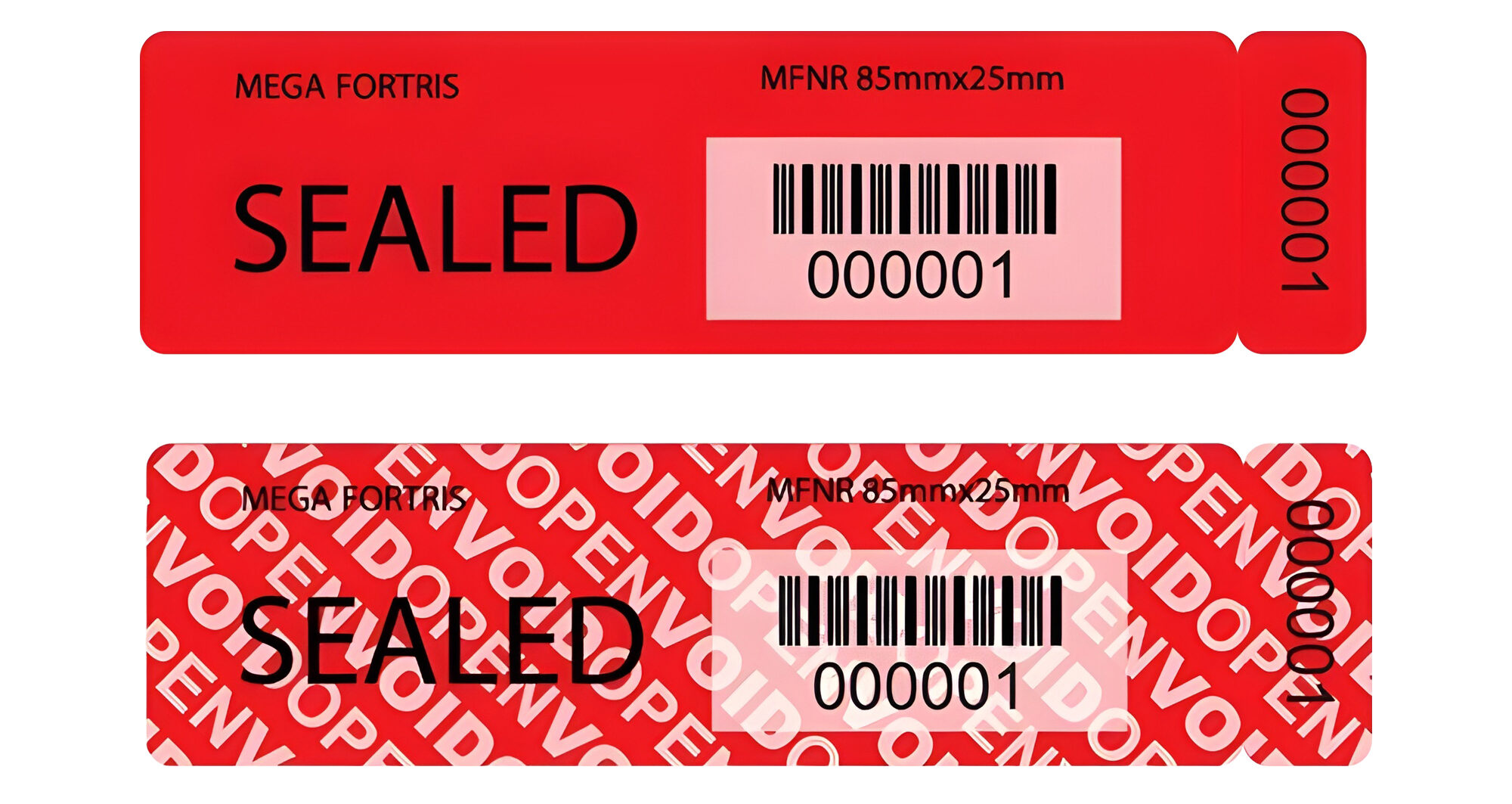
Where Tamper-Evident Seals Fit Into a Loss Prevention Strategy
Tamper-evident seals work on a simple but powerful principle: they don’t just slow down tampering – they make it undeniable. A broken strap, a distorted impression, or a revealed ‘VOID’ message instantly communicates that a container, case, or package has been compromised, shifting accountability back onto whoever last had custody of the goods.
In-Store Applications
Security labels and tamper tape are commonly used on high-value packaging, cash bags, and till transfers, giving staff and managers an immediate, visual way to confirm nothing has been accessed since sealing.
Warehouse and Distribution Centre Applications
Applying seals at the point of pick, pack, or pallet consolidation creates a documented chain of custody. If a discrepancy shows up downstream, the seal record (not guesswork) tells you where in the chain it happened.
In-Transit and Last-Mile Applications
For hauliers, intermodal containers, and last-mile delivery, high-security bolt and cable seals are often required to meet recognised standards. ISO 17712 is the internationally recognised benchmark for mechanical security seals, classifying seals into three tiers: Indicative (I), Security (S), and High Security (H) – the latter required for many international shipments and requiring documented evidence of tampering processes from manufacturers under Clause 6 of the standard.
With parcel and delivery theft now a growing, well-documented loss category in the UK, applying this standard beyond international freight – to domestic distribution and last mile delivery – is an increasingly common response.
Choosing the right seal class isn’t just a compliance checkbox, it directly affects how much friction and cost a would-be thief has to overcome before tampering becomes visible.
Building a Layered Loss Prevention Program
No single control – training, cameras, EAS, or seals – solves shrinkage alone. UK retailers have collectively increased crime prevention spend to record levels, and the retailers seeing the strongest results combine:
- Visibility – data, audits, and reporting to know where loss is happening
- Deterrence – EAS, CCTV, visible security presence
- Accountability – staff training and clear procedures
- Physical proof – tamper evident seals and labels at every custody handoff
Layering these controls closes the gaps that a single measure inevitably leaves open, and it creates an audit trail that makes root-causing shrink far faster when it does occur.
Retail shrinkage is the difference between recorded inventory and actual physical inventory. It's caused by a mix of external theft (shoplifting, ORC), internal employee theft, administrative errors, and supplier or in-transit fraud.
They make any attempt to access a container, package, or case immediately visible - through a broken strap, distorted seal, or revealed 'VOID' message - deterring tampering and creating clear accountability at each point of custody.
No - by design, tamper-evident seals are single use. Once broken or removed, they cannot be reapplied without leaving visible evidence, which is what makes them effective.
Ready to Strengthen Your Loss Prevention Strategy?
Shrinkage rarely has one cause, and it shouldn’t have one solution. If you’re evaluating where tamper-evident seals could close gaps in your current loss prevention programme, our team can help you assess your supply chain and match the right seal class to your risk profile.